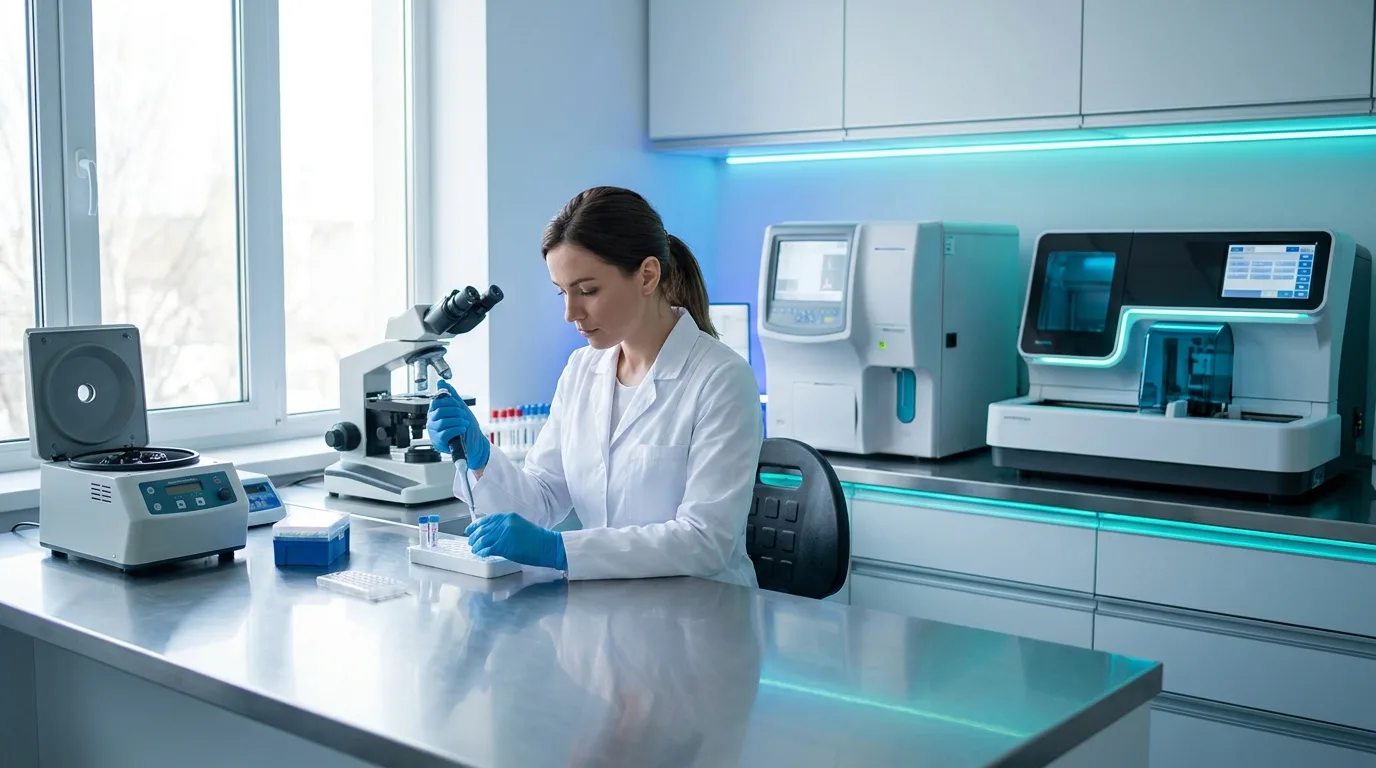
How to set up a diagnostic laboratory
A practical roadmap for planning, building, equipping and commissioning a modern diagnostic laboratory — from test menu to accreditation readiness.
1. Planning: define the lab before you draw it
A successful laboratory starts on paper. Before any bench is drawn, define the test menu you’ll offer, the daily and peak volumes you expect, and the turnaround times your clinicians need. These three numbers drive almost every later decision — from analyser choice to bench length to staffing.
Map your workflow as a physical journey: sample reception, registration, preparation, analysis, reporting and storage. The best layouts minimise how far a sample travels and keep clean and contaminated zones properly separated.
2. Layout & infrastructure
Laboratory infrastructure is unforgiving to retrofit, so get it right first time. Key systems to plan alongside the layout:
- Benching & ergonomics — durable, chemical-resistant surfaces at correct working heights
- Water purity — analyser-grade purified water where instruments require it
- Power & UPS — clean, backed-up power for critical analysers and cold chain
- Ventilation & biosafety — fume extraction, biosafety cabinets and containment where needed
- Waste handling — compliant segregation and disposal of biological and chemical waste
3. Instrumentation
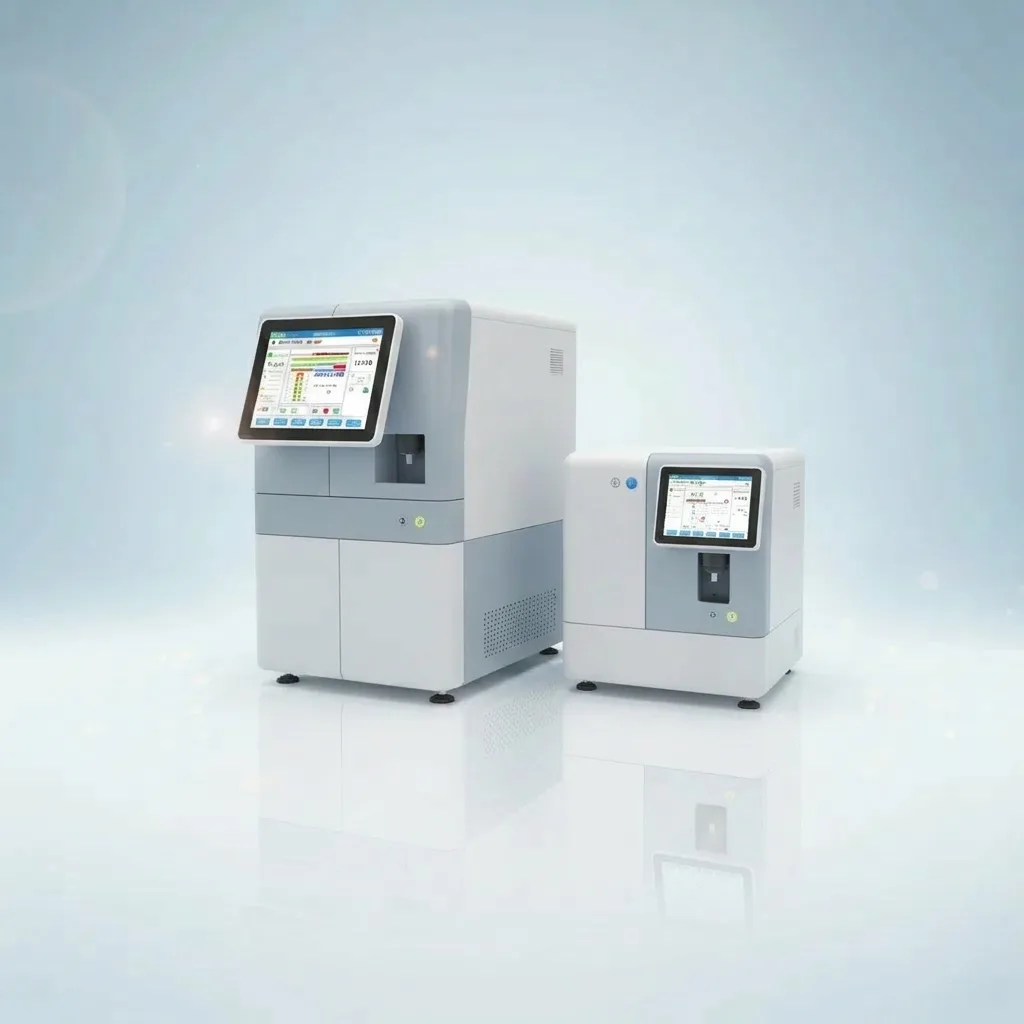
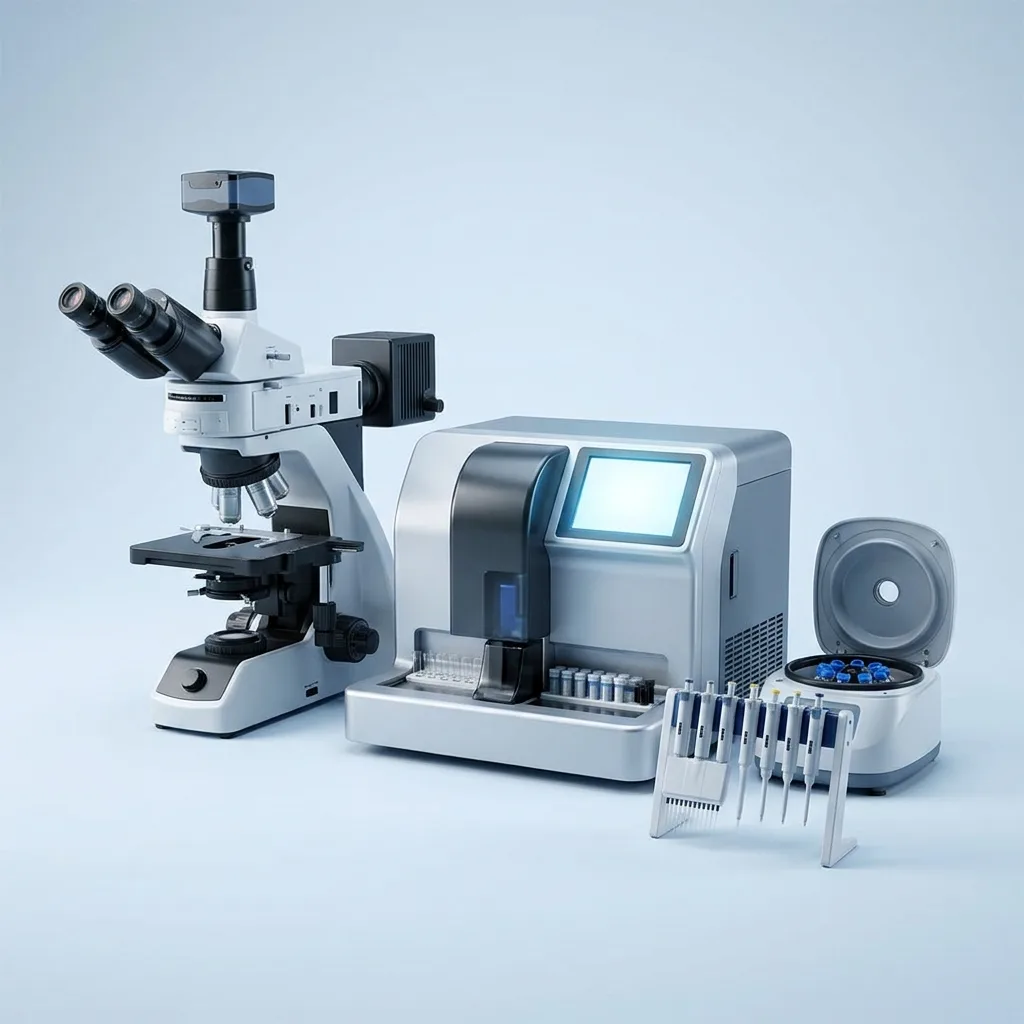
Choose analysers around your menu and volumes, not the other way around. Over-specifying wastes capital and service cost; under-specifying creates bottlenecks. Consider throughput, the cost and availability of reagents, service response times, and how well instruments connect to your laboratory information system.
Vendor-neutral advice matters most here — the “best” analyser is the one that fits your workload, budget and service reality, not the one with the biggest brochure.
4. Commissioning & accreditation
Once built and installed, a laboratory must be validated before it goes live. Instrument qualification (IQ/OQ/PQ), quality-control setup and workflow validation confirm the lab performs as intended. Building with ISO 15189 readiness in mind from the start makes eventual accreditation far smoother.
5. Realistic timelines
A mid-sized diagnostic laboratory typically moves from design sign-off to commissioning over several weeks to a few months, depending on civil works and instrument lead times. Phasing — getting core testing live first, then expanding — often de-risks the programme.
Frequently asked questions
How long does it take to set up a diagnostic lab?
For a mid-sized lab, typically a few weeks to a few months from design sign-off to commissioning, depending on civil works and instrument lead times.
Can you both design and equip the lab?
Yes — TMRS Medlab delivers laboratory setup as a turnkey service, from layout design through instrumentation and commissioning.
Do you help with accreditation?
We design and commission with ISO 15189 readiness in mind and provide supporting documentation.

Ready to plan your project?
Our specialists can turn this into a concrete scope, budget and timeline for your facility.